
I was surprised when the librarian in Hagerstown, Md., asked about my speaking fee. That almost never happens.
I have agreed to talk at the Washington County Free Library this October as part of its McCauley Lecture Program. The library is interested in Condemned for Love, my new book, because a portion of it takes place in western Maryland.
“I do want to double-check that you are OK with our lecture fee,” the librarian wrote, adding that the fee probably would not cover the cost of my travel, meals and hotel stay.
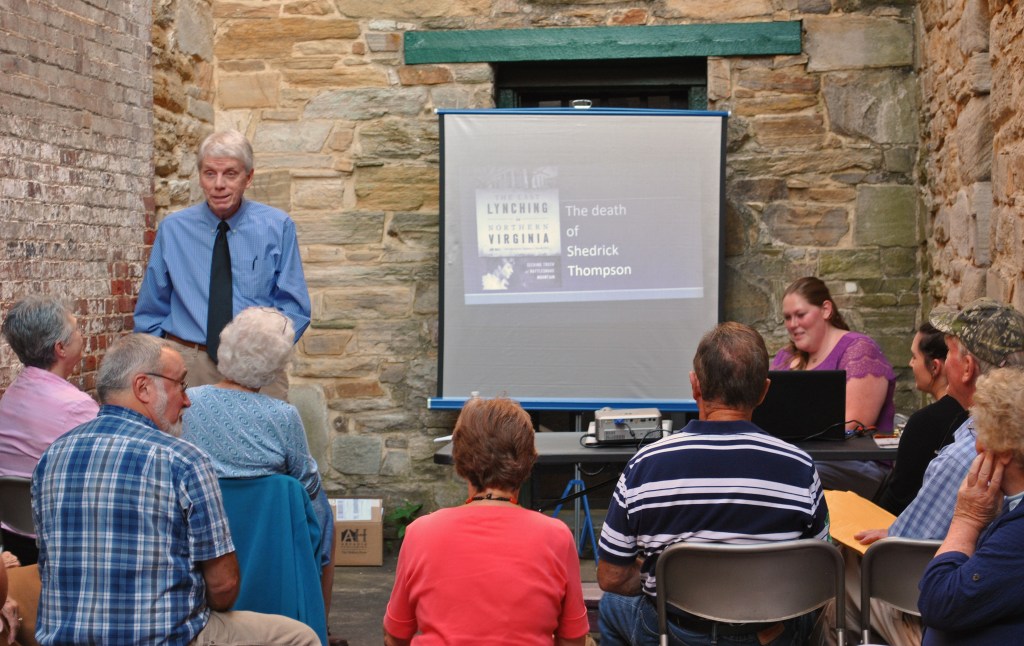
She was correct; the fee would not cover my costs, but that is not unusual. The expenses associated with one of my talks are usually mine to bear. The reasons for that are complicated and embarrassing.
For one, I’m a coward when it comes to talking about money. How do I calculate the value of my research, my travel, my time? It’s simpler if I don’t bring it up.
I saw this same hesitation in the University of Mary Washington student I hired this spring to revise my website. She and I talked for an hour about type styles, the use of photos and a dozen other topics. She was building a website design business, she said, and I was her first customer. Perhaps because of that, she never mentioned price.
“So how much is this going to cost me?” I finally asked.
She looked pained as she tried to decide on an hourly rate and then multiply by the number of hours the job would take. She offered a number, and I accepted. I think both of us were pleased. I know I was happy with her work.
When sponsoring a talk, groups seem to have money in their budgets for speakers but wait for their guests to bring it up. If the speaker doesn’t bring it up, they don’t either. I’ve given more than 40 talks since publication of my first book, all of them before civic groups, nonprofits and school classes. You can count on one hand the number of times I’ve been paid.
I appreciate it when I do receive a fee, and I usually sell copies of my book to help pay for my gasoline. But I’ve also concluded that the absence of a payment is OK, that my presentation is an offering, a type of community service.
When I give a talk and look at the faces of those in attendance, I see a mix of interest, revulsion and surprise. “I had no idea,” is by far the most frequent comment I hear afterward. Listeners are stunned to learn that mob violence was as prevalent as it was, and that it claimed as many lives as it did. The topic of lynching seems to be missing from our history classes.
So I told the Hagerstown librarian that her fee would be fine, that I hope my talk will bring the past forward, and that it will serve the goal of racial reconciliation. As Bryan Stevenson, founder of the National Memorial for Peace and Justice in Alabama, said, “Truth and reconciliation are sequential. We can’t get to where we’re trying to go if we don’t tell the truth.”
 Jim Hall