
Of all the characters in Condemned for Love, Colly Pattie strikes me as one of the most interesting. Colly was witness to two lynchings, tried to stop them and failed both times.
Colly was 17 and asleep in the family quarters in the county jail in Warrenton when the first lynching occurred. His father, Horace, the jailer, was overwhelmed by a mob who kidnapped and later hanged Arthur Jordan, one of the prisoners.
Colly slipped away while the mob was in the jail and ran across the street to get help from Charles Smith, the town sergeant. Smith’s reaction was just the opposite of Colly’s and may have been an early life lesson for him. The teenager had put himself at risk to help his father and Jordan, but he quickly learned that Smith was not about to challenge the mob to save a Black man.
When Colly told Smith that the mob numbered about 40 people, Smith said he wouldn’t go against that many men. “I’m going back to bed,” he said.
Colly dealt with a second lynching 11 years later. By then his father had died, and Colly had succeeded him. He would serve as county jailer for more than 20 years.
In 1891, two of Colly’s prisoners had been convicted of the murders of a local widow and her children. The case was a sensational one involving two white men named Lee Heflin and Joseph Dye. When their execution was delayed to allow a court appeal, members of the community were enraged and decided to lynch the men.
Colly learned of their plans and, perhaps remembering the Jordan case, decided to move his prisoners to another jail. However, the mob caught them on the way and hanged the two men.
Pattie is said to have pulled a gun to defend his prisoners, but his deputy told him “Put up your pistol, Colly, or this mob will hang you, your horse and the wagon.”
Southern sheriffs and jailers were often criticized for not resisting lynchers, so it’s possible that the stories of Colly’s courage were exaggerated.
I disagree. There is considerable testimony that Colly acted decisively in both cases, whether it was slipping away from his home to get help or moving his prisoners to avoid the mob. Many jailers simply handed over the keys when lynchers showed up.
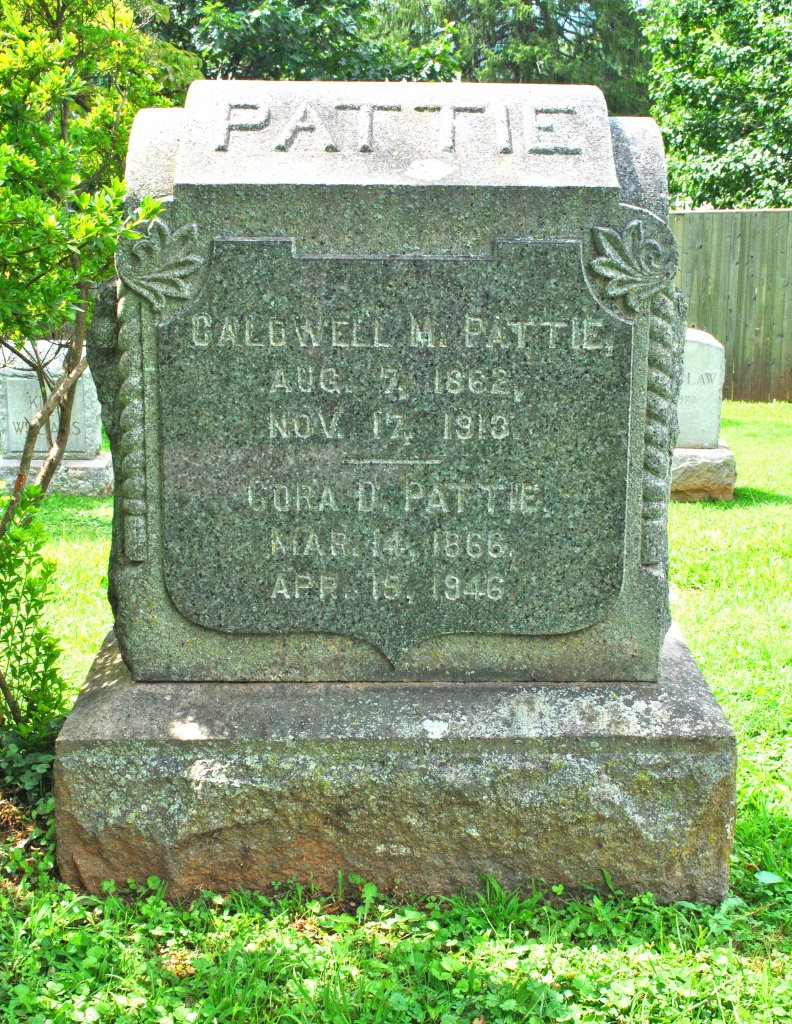
Colly died of tuberculosis at his home in 1913. He was 51. He and Cora, his wife of 28 years, are buried in the Warrenton Cemetery. His grave is a few yards from the spot where Arthur Jordan was murdered.
 Jim Hall